
ShieldMee Inc. · 501(c)(3) Nonprofit
Therapy for Veterans in Florida
Some of what you carry doesn’t fit the word “trauma.” It fits a different word — and almost nobody names it.
Therapy for Florida Veterans: When the Wound Isn't Just PTSD
You’ve probably already been handed the PTSD framework. The hypervigilance, the nightmares, the startle response. And for some of what you’re dealing with, it fits. But there’s another part — the part you don’t talk about, maybe have never said out loud — that the standard framework doesn’t touch.
It’s not fear. It’s not a flashback. It’s the weight of something you did, or saw, or couldn’t stop. The decision that still doesn’t sit right. The thing that violated something in you that you didn’t even know was there until it broke. You came home changed, and not in the way the briefings warned you about.
That has a name. It’s called moral injury, and it’s real, and it’s treatable — but only by someone willing to take it seriously as what it is.
Moral injury is not PTSD.
PTSD is, at its core, a fear-based wound — the nervous system stuck in survival after danger. Moral injury is different. It’s the wound that comes from doing, witnessing, or failing to prevent something that went against your own deepest sense of right and wrong.
It shows up as guilt that won’t lift. Shame that sits in your chest. A sense that you’re no longer the person you were, or that you don’t deserve the life you came back to. It can look like numbness, or anger, or a quiet conviction that nobody could understand — and it doesn’t respond to exposure therapy or a medication adjustment, because it isn’t a malfunction to be corrected. It’s a moral and existential wound, and it has to be treated like one.
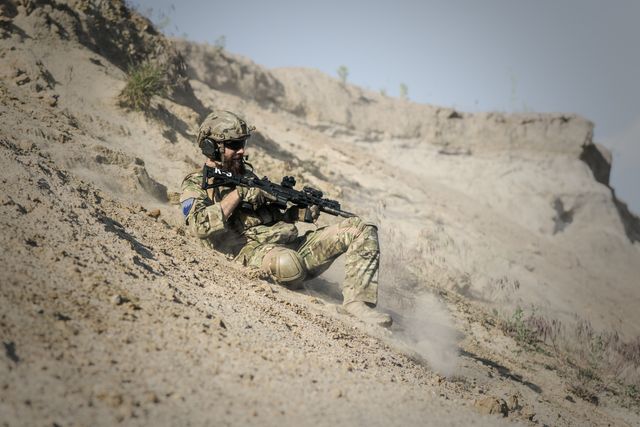
"You weren't there."
The hardest part is often the isolation. The belief that you can’t talk about this with anyone who wasn’t in it — that a civilian therapist will either flinch, or pathologize
you, or try to reassure you out of something that doesn’t deserve cheap reassurance.
You’re not wrong that a lot of therapy can’t hold this. Being told your feelings are “valid” while someone waits for you to feel better is not the same as someone who can sit in the actual weight of what you carry without needing you to put it down for their comfort.
What it costs at home.
Moral injury and combat trauma don’t stay in your head. They land on your marriage, your kids, the people who love you and can’t reach you. The distance, the temper, the wall — the people closest to you feel it even when you can’t explain it. Sometimes the work is individual. Sometimes it includes the people you came home to, because they got hit by the blast too. ([We do couples and family work as well.])
Why standard therapy often misses it.
Too much therapy for veterans tries to manage the symptom and skip the meaning. It treats the guilt as a distortion to be corrected rather than a moral signal to be reckoned with. But you don’t need someone to talk you out of what you feel. You need someone who can help you carry it, make sense of it, and find a way to live with integrity on the other side of it — without pretending it didn’t happen or that it didn’t matter.
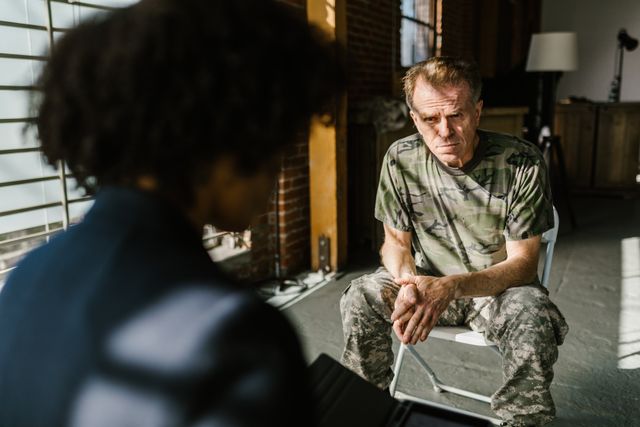
That requires a clinician who won’t flinch, won’t rush to fix you, and won’t treat your moral weight as a symptom to be medicated into silence. We work with the cases other practices find too heavy — and this is exactly that kind of work.
If you're in crisis.
If you’re struggling right now, or thinking about ending your life, please reach out — call 988 and press 1, or text 838255, to reach the Veterans Crisis Line. You can also reach them online. You made it back. The fight now is a different one, and you don’t have to take it alone.
Where to start.
You don’t have to have the words for it. Most people don’t, especially for the part that isn’t fear. Starting to find them is the work.